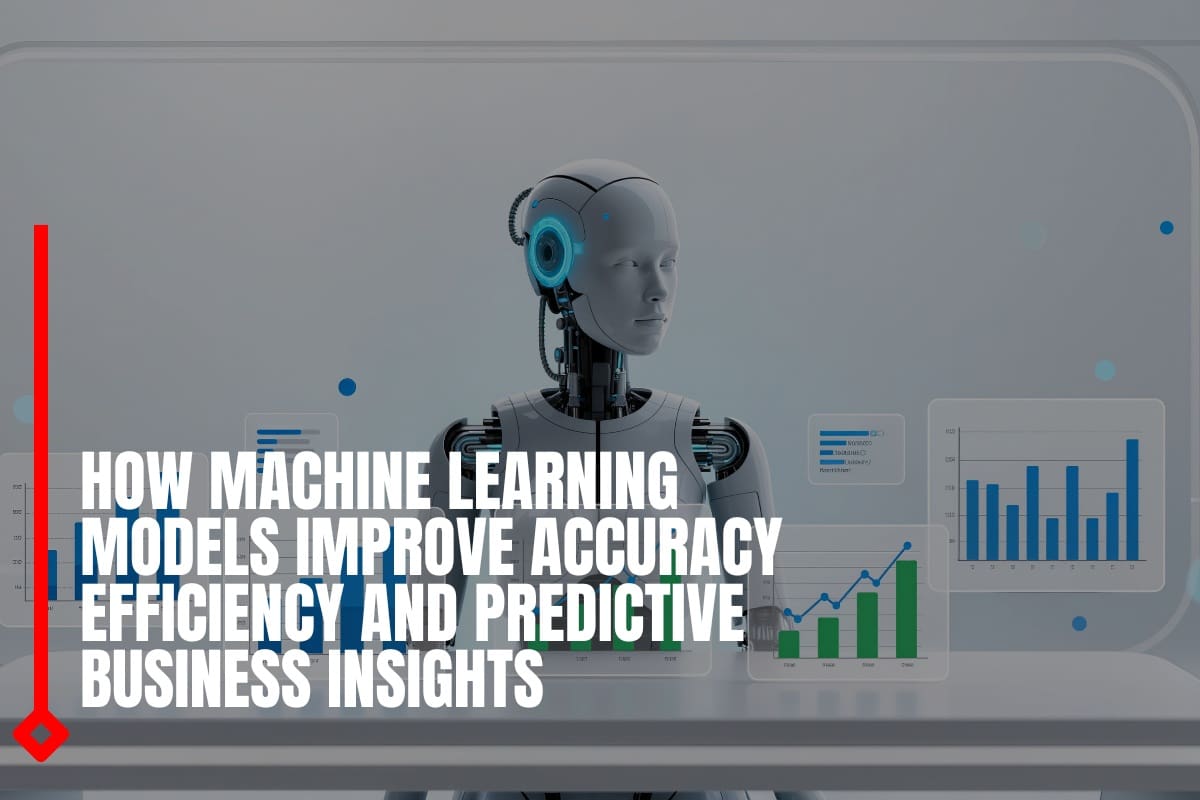
Machine learning models enhance accuracy by learning patterns from vast datasets, outperforming traditional rules-based systems in prediction tasks like fraud detection, where they achieve 95%+ precision. They boost efficiency through automation of repetitive analyses, cutting processing times by 70-90% in supply chains and customer service. For businesses, these translate to actionable insights, such as demand forecasting that reduces stockouts by 30% and informs strategic pivots.
Core Mechanisms of Machine Learning
Supervised models like regression and classification train on labeled data to minimize errors via algorithms such as gradient descent, iteratively refining weights for 85-99% accuracy in mature applications. Unsupervised techniques cluster data for anomaly detection, while reinforcement learning optimizes decisions in dynamic environments like pricing.
Feature engineering and hyperparameter tuning via cross-validation prevent overfitting, ensuring generalization; ensemble methods like random forests combine weak learners for 10-20% accuracy gains. Continuous retraining adapts to drifts, maintaining efficacy as data evolves.
Boosting Accuracy in Predictions
ML excels in noisy, high-dimensional data: neural networks discern subtle signals in images or text, as in healthcare diagnostics where CNNs match radiologists at 94% accuracy. Transfer learning from pre-trained models accelerates fine-tuning, slashing errors in niche domains like retail sentiment analysis.
Bias mitigation through diverse datasets and fairness audits ensures equitable outcomes; explainable AI (XAI) tools like SHAP reveal decision paths, building trust and enabling refinements. Real-world benchmarks show ML reducing forecast errors 40% over statistical methods.
Enhancing Operational Efficiency
Automation via ML streamlines workflows: predictive maintenance in manufacturing anticipates failures 80% earlier, minimizing downtime by 50%. Chatbots handle 70% of queries autonomously, freeing agents for complex issues and cutting costs 30%.
In supply chains, models optimize routes and inventory, processing terabytes in seconds versus manual reviews taking days. Edge ML deploys on devices for real-time decisions, reducing latency in IoT scenarios like autonomous logistics.
Delivering Predictive Business Insights
Recommendation engines analyze behaviors to personalize offers, boosting conversion rates 20-35% as in Amazon’s systems. Fraud models flag anomalies in milliseconds, saving billions annually by scoring transactions dynamically.
Market trend prediction via time-series models like LSTM forecasts sales with 90% accuracy, guiding resource allocation; customer churn models identify at-risk users early, lifting retention 15-25%. These insights shift reactive tactics to proactive strategies, enhancing ROI.
Industry Applications and Case Studies
Retail leverages ML for dynamic pricing and assortment, with Walmart using it to optimize shelves and cut waste 20%. Finance employs it for credit scoring, approving 10% more loans accurately while curbing defaults.
Healthcare ML predicts readmissions, integrating EHRs for 85% precision in interventions. In e-commerce, personalization engines drive 35% of revenue via collaborative filtering.
Challenges and Optimization Strategies
Data quality issues like imbalance degrade performance; solutions include augmentation and SMOTE for 15% accuracy lifts. Scalability demands cloud GPUs; AutoML automates pipelines, democratizing access.
Ethical deployment requires governance: regular audits and human oversight prevent drifts, ensuring sustained value.
Future Trends and Business Impact
By 2025, federated learning preserves privacy while training across silos, and generative models synthesize scenarios for robust planning. Businesses adopting ML report 2-3x revenue growth from insights-driven decisions. Integration with edge and AutoML scales impact enterprise-wide.
FAQs
Q. How do ML models achieve higher accuracy than traditional methods?
Through pattern learning from data, ensembles, and retraining, reducing errors 40% via generalization over rules.
Q. What efficiency gains come from ML automation?
70-90% faster processing in workflows like maintenance and chatbots, minimizing downtime and costs.
Q. How do recommendation engines provide business insights?
Analyzing behaviors for personalization, boosting conversions 20-35% and revenue via targeted offers.
Q. Why retrain ML models regularly?
To adapt to data drifts, maintaining 85-99% accuracy in evolving environments like markets.
Q. What role does XAI play in business ML?
Reveals decision logic via tools like SHAP, ensuring trust, refinements, and ethical use.